The days of “blind lending”, relying solely on personal relationships and outdated spreadsheets are fading fast. As we head into 2026, the construction industry faces a clear choice: stick with slow, paper-heavy oversight that creates delays and vulnerabilities, or embrace digitized tools that deliver real-time visibility and faster, safer capital deployment.
For bankers, lenders, and those managing vendor relationships, success now depends on blending proven human expertise with emerging technology. Services like those from CFSI provide the on-the-ground rigor, while platforms like Nitro-AI bring AI-powered verification and workflow acceleration. Together, they help protect capital while keeping projects moving.
The Evolution: From Weeks-Long Delays to Real-Time Insights
Traditional construction lending often meant weeks between a draw request (a formal ask for funds based on project progress), an on-site inspection, a typed report, and finally releasing money. These lags could drain momentum leading to unpaid trades walking off-site, disputes, and higher costs to restart.
Today, AI is helping collapse those timelines dramatically. Platforms like Nitro-AI use artificial intelligence to analyze data from multiple sources (photos, documents, progress reports) in near real-time, flagging issues early and supporting faster decisions.
Key advancements include:
Automated Milestone Verification: AI can cross-check site photos, invoices, and progress data against budgets to confirm work is done before funds release reducing wait times from days to hours in many cases.
Improved Transparency Tools: Emerging concepts like tokenized structures (dividing project ownership or funding into digital shares on secure ledgers) and smart contracts (self-executing agreements that trigger payments automatically when conditions are met) are gaining traction for larger deals, though full adoption faces regulatory and integration challenges.
The real win? Preserving site momentum the most critical (and hardest-to-replace) asset in construction.
Contractor Due Diligence: The “Who” Drives the Outcome
No set of blueprints can overcome a weak contractor. Lenders often scrutinize the borrower’s credit, but the general contractor (GC) the one managing day-to-day spending poses the biggest risk.
A thorough vetting process, like the one CFSI employs, looks deeper:
- Financial Health: Can the GC cover costs between funding draws without diverting funds?
- Project Load: Are they stretched too thin across multiple jobs?
- Track Record: Review safety incidents, lawsuits, or payment disputes that could derail progress.
Case Study Example: In a recent multifamily project, a lender overlooked a GC’s history of shifting funds between jobs. Early red flags went unnoticed, leading to cash flow issues and delays. Rigorous invoice auditing and fund control could have spotted “leakage” (funds not going where intended) within the first month by matching every payment to verified work and signed lien waivers (documents where contractors confirm they’ve been paid and waive future claims). Inspections don’t tell the whole story!
Feasibility and Costing in a Volatile 2026 Economy
Budgets drafted even six months ago can become outdated quickly due to:
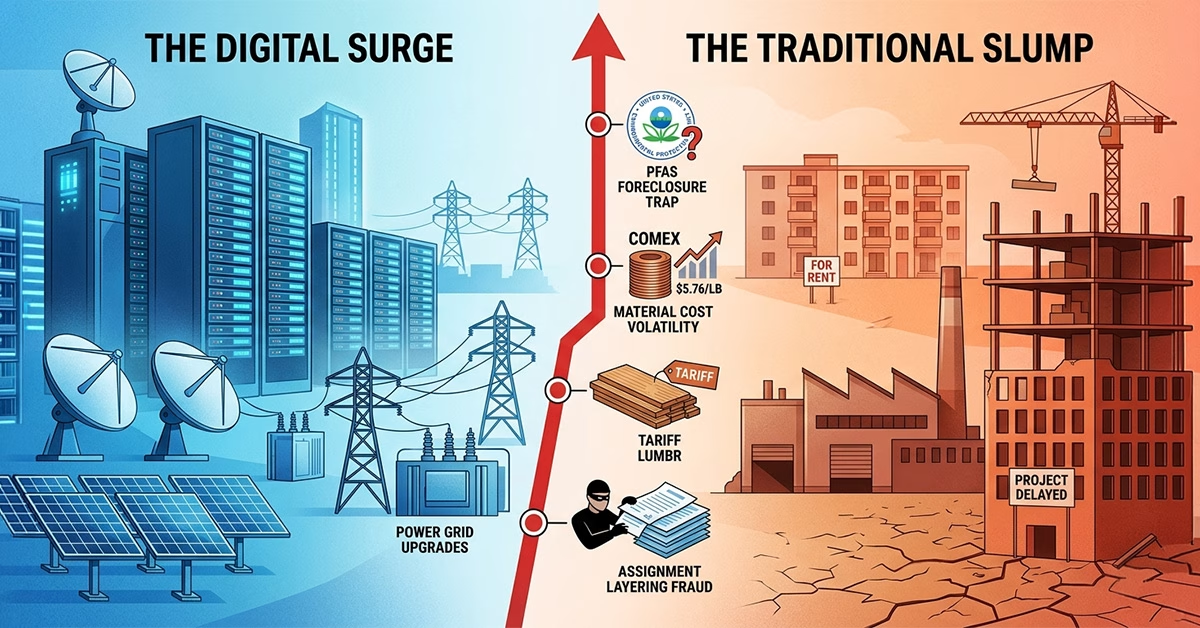
Tariffs and Material Costs: Ongoing trade policies continue pushing up prices for steel, copper, aluminum—often by 15-25% on key items.
Labor Shortages: The industry needs hundreds of thousands more workers annually, driving wage increases that are now baked-in realities.
Lenders should mandate sensitivity testing on every project budget: Model scenarios like a 10-15% rise in materials or labor. If the project’s projected profitability (measured by Net Present Value, or NPV—a calculation of future cash flows discounted to today’s value) turns negative under moderate stress, reconsider the deal.
Budget Management and Fund Control: Keeping Trades Paid and On-Site
The core goal of fund control is straightforward: Ensure funds reach the right people for the right work so the site doesn’t grind to a halt. A delayed payment to a key subcontractor can empty a site by Monday.
Effective approaches include:
- Proactive monitoring of progress rather than waiting for draw requests.
- Direct payments to major vendors in higher-risk scenarios to prevent diversion.
- Detailed auditing to confirm every dollar ties to completed, verified work.
Inspections: Beyond “Looks Good” to Forensic Detail
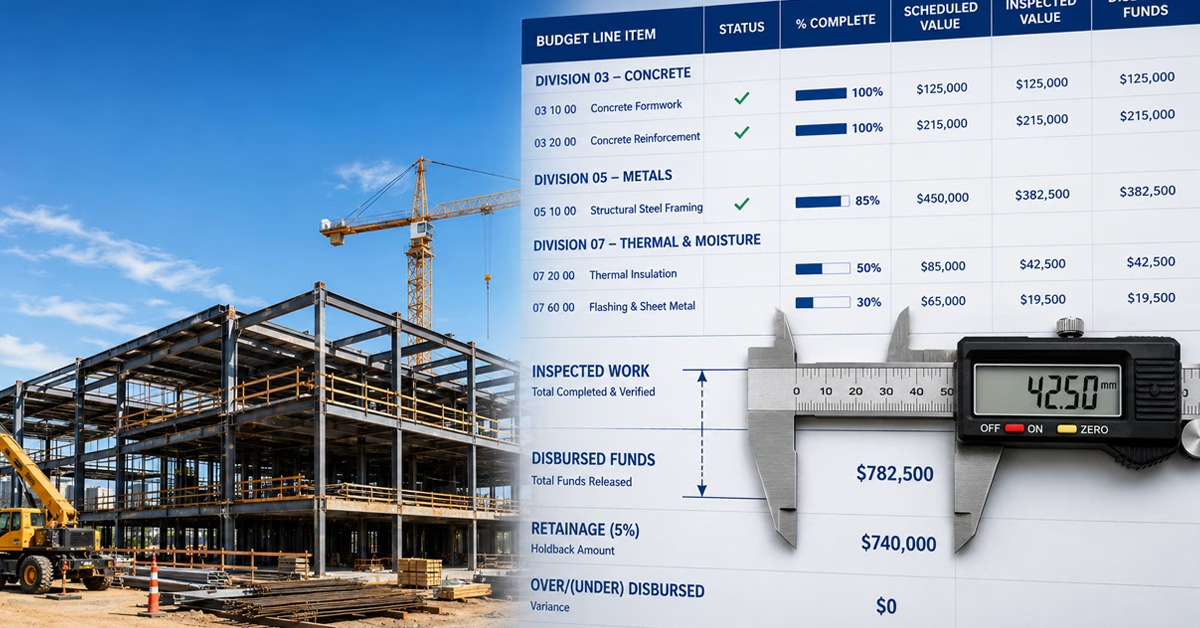
A vague one-page report offers little protection. Strong inspection reports act like a bank’s remote eyes, including:
- Timestamped, location-verified photos (using geofencing to confirm the inspector was actually there).
- Verification of stored materials (ensuring they’re real, on-site, and intended for this project).
- Accurate percentage of completion based on actual work in place—not contractor estimates.
Smart Contingency Planning
For larger projects ($50M+), use a tiered contingency approach:
- Hard Costs (5-10%): For surprises like poor soil conditions.
- Soft Costs: For delays in permits or interest rate changes.
- Escalation Reserve: Dedicated funds for material/labor price swings
Case Study Example: A Texas warehouse project hit a sudden 30% steel cost spike mid-build. Because an escalation reserve was pre-allocated, the lender avoided re-approving the loan keeping the project on track without breaking momentum.
The Path Forward: Human Expertise + AI Precision
The future lies in integration: Ground-level validation from experts like CFSI combined with AI-driven tools from platforms like Nitro-AI. This enables:
- Faster, more accurate draw approvals.
- Reduced fraud through automated cross-checks.
- Better data for portfolio oversight.
While full smart contracts and tokenization aren’t yet standard (due to legal and tech hurdles), they’re accelerating transparency and efficiency where implemented.
Summary of Key Risk Mitigation Layers
| Service | Purpose | Primary Risk Mitigated |
|---|---|---|
| Document & Cost Review | Validates budget realism pre-closing | Over-leveraging or under-funding |
| Contractor Vetting | Assesses GC’s financial & operational strength | Contractor failure or default |
| Fund Control | Oversees draws and payments | Misuse or diversion of funds |
| Progress Inspections | Verifies physical work completed | Over-billing, fraud, or non-performance |
| AI-Enhanced Workflows | Accelerates verification & insights | Delays, undetected issues, manual errors |
Conclusion
Construction lending in 2026 is about navigating volatility with better data, faster execution, and smarter partnerships. By combining deep industry knowledge with AI tools, lenders can shift from reactive risk management to proactive capital protection, turning potential headaches into competitive advantages.